I have spoken Greek for many years. It’s very convenient here on the island although I know my version of Greek hasn’t quite kept pace in the chic cafes where my niece and I share a bowl of loukoumades ( basically honey soaked doughnuts) and a cup of green tea. You certainly could never have found green tea in a Greek cafe when I was learning. Is it more refined to add on a diminutive suffix ? Not a gato ( cat) a gataki. Not a coffee – a cafedaki when I shop for my granddaughter -engoni… in the words of the sales lady she becomes my engonoula…
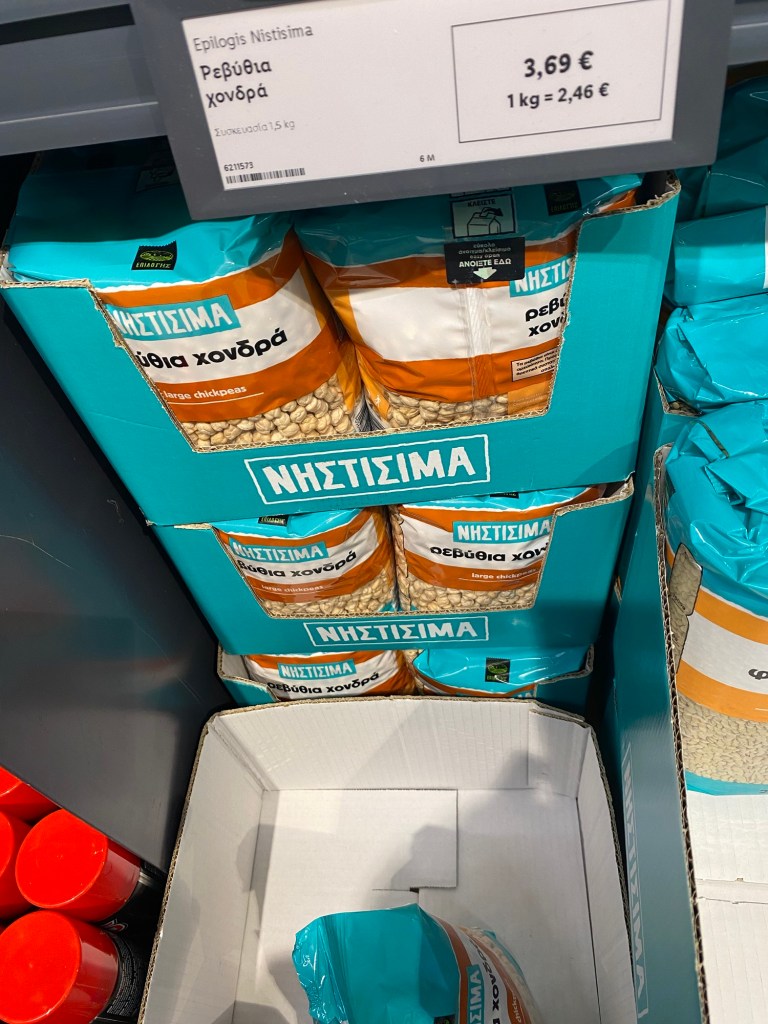
The word in white letters on blue means “ fasting food”. Yes, in this modern supermarket there are special sections for people who are observing the Paschal fast. May 5 is Easter Sunday for Orthodox Christians. Until then meat,milk and fish are forbidden. Is anyone really fasting? It seems somebody must be doing so or why would the business bother stocking these things?
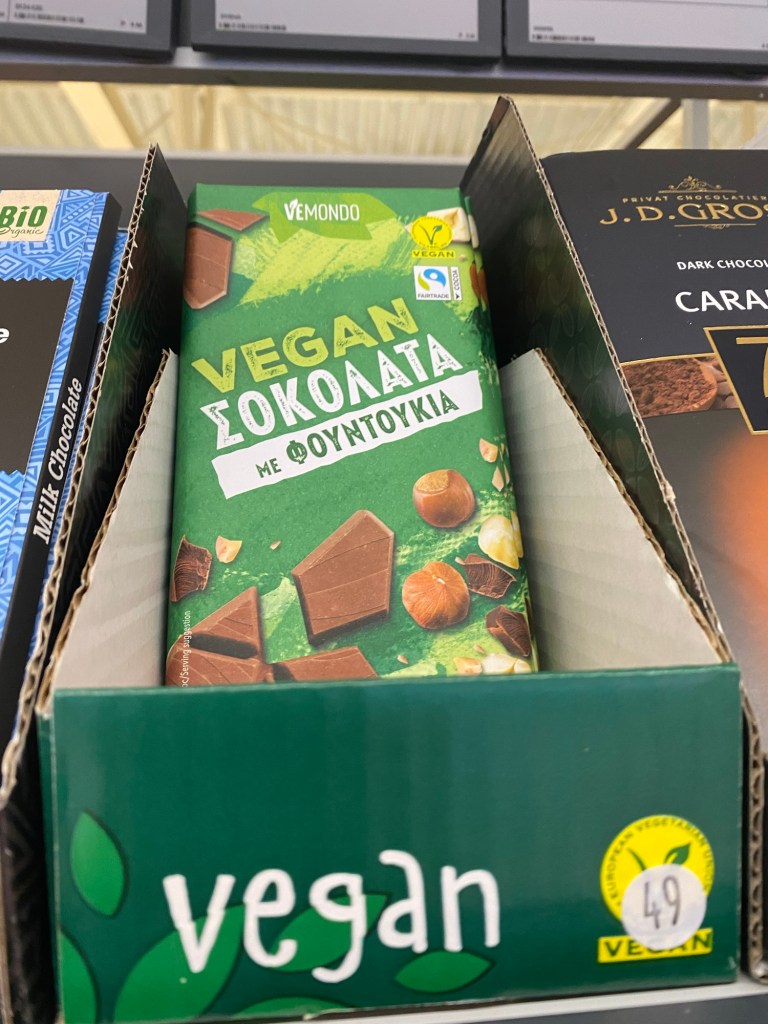

At a hefty 7 euros for about fifty of them. Of course, a couple of kilos of the most delicious local tangerines costs less than a euro.
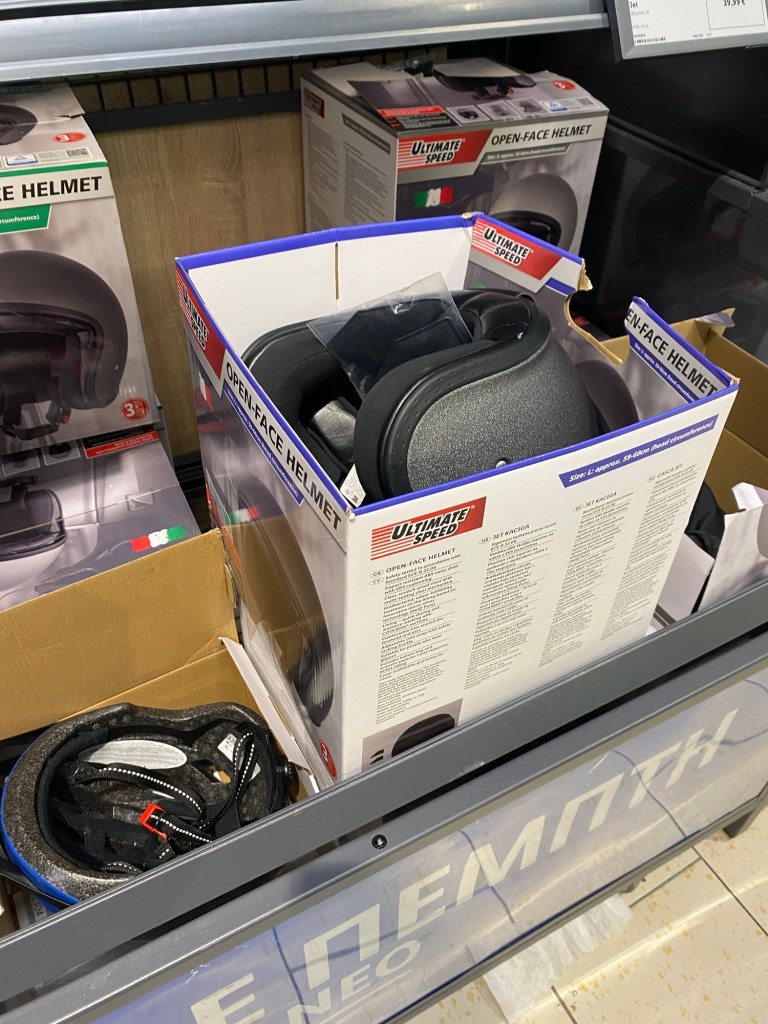
Sorry for the michanaki…an unlikely purchase in a Canadian supermarket but here, a necessity.
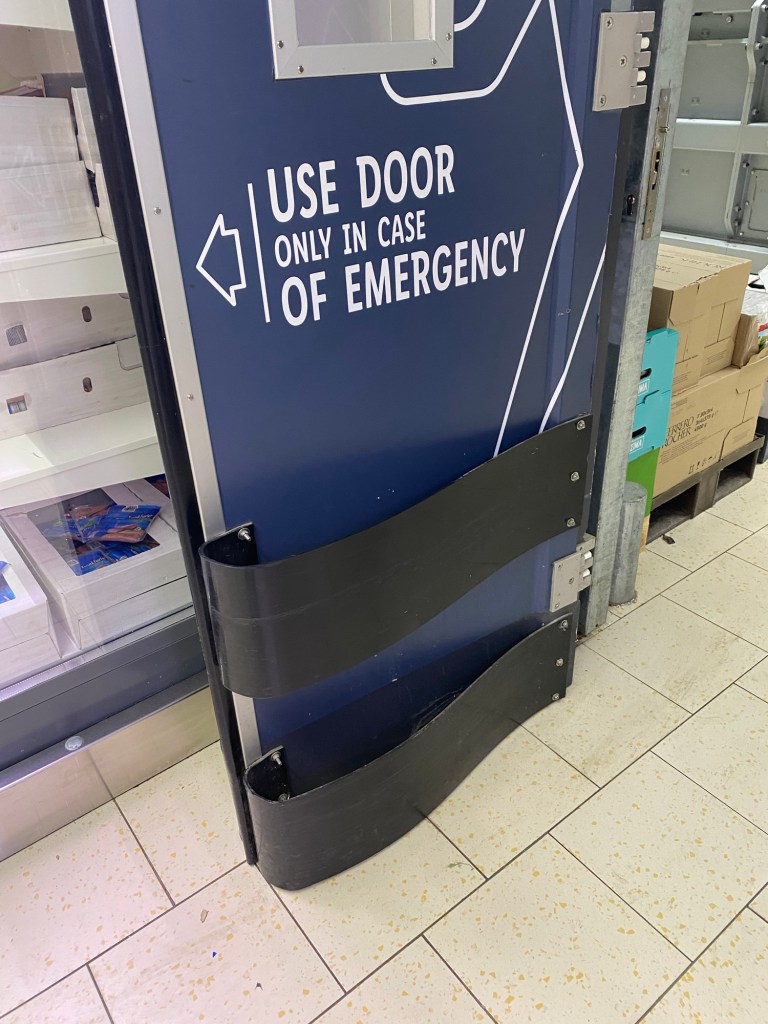
Why such a notice in English? In anything but an emergency must we exit by the window?
Yesterday we went to buy flowerpots. Everyone is setting out their window boxes and garden pots. My niece and I made some purchases and exchanged the usual polite phrases as we left. I was struck that the owner waved us off with the phrase…” san ta psila vougna “ That means “ Like the high mountains.”
I was a bit puzzled by this and asked Katy about it later. She explained it as a sort of wish… that we should be unassailable, that we should be admired, enduring like the Rocky Mountains all around us. It struck me as very beautiful and very Greek. For all the trendy cafes on the waterfront and people walking Pomeranians, something remains. It took me a long time to learn that there is a point to which I can approach and beyond that … no further


 isobelmtl
Leave a reply to Elena Cancel reply